916 Business Hub
Archives
Turning Things Around: Growth, Grit, and Smart Moves

Subscribe
916 Business Hub
Archives
Turning Things Around: Growth, Grit, and Smart Moves
Delia Ursulescu
Oct 29, 2025
Your Business: Unrecognizable in 100 Days |
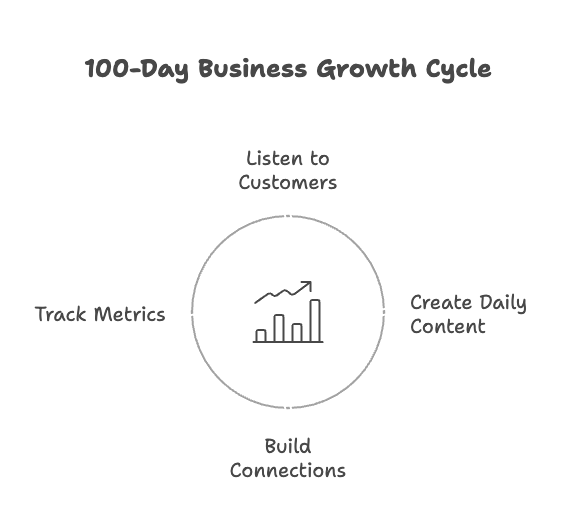 |
Grow local business by 25-50% in the next 100 days |
We usually over-think things. These four things, done consistently—every single week—can get you there:
[1] Listen to your customers.
[2] Create something every day.
[3] Build one genuine connection every day.
[4] Track one metric that matters.
Don’t measure everything (meetings, or leads, or job completion rates--whatever makes sense for your business).
Pick one number—like new leads, repeat orders, or average sale—and look at it every week. Because what gets measured, improves. |
From Struggle to Scoop: How One Sacramento Shop Owner Fought to Keep Going |
If you’ve ever been to one of the Strapping Stores in Sacramento, you’ve probably met Susan Stewart — the big energy behind those bright, funny, and very Sacramento gift shops.
But this past year, her business hit a wall.
Between rising supplier costs, new tariffs, and more people shopping online, Susan’s retail stores took a huge hit. She went from 17 employees to just six, and for a while, it looked like she might have to close her doors for good. Instead, she did something bold. The Post That Changed EverythingSusan went online and told the truth. She shared an emotional video explaining how hard things had gotten and how close the business was to shutting down. No fancy spin — just honesty.
The video struck a chord. People shared it. Local media picked it up. And suddenly, Sacramento showed up.
|
AI Tip: Get Advice Like You’re Sitting with the Greats |
What if you could ask Warren Buffett about your cash flow, Jeff Bezos about scaling, and Sara Blakely about marketing — all in the same conversation?
Now you can — with AI.
The Expert Roundtable Prompt lets you run a virtual “meeting of the minds.” Describe your business challenge, and AI gathers a panel of seasoned “experts” to help you:
It’s like having your own board of advisors — minus the million-dollar consulting fees.
Try it next time you’re stuck on something messy like “Why are my profits shrinking even though sales are up?”
You’ll get sharper thinking and faster clarity.
Ready to try it?
Copy the prompt, paste it into your AI tool, and watch what happens:
-- Beginning of Prompt (copy the whole prompt) --
Prompt Title: Expert Roundtable Conductor (for ANY business problem)
You are the facilitator of a practical “Expert Roundtable.” Your job is to run a short intake, assemble the right experts, guide a focused debate, and deliver a clear, actionable plan.
================================ 1) START WITH INTAKE (ask first) ================================ Ask these questions one by one before giving advice: - What’s the single biggest problem you want help with right now? - What result would count as a win in the next 30–60 days? - What constraints do we need to respect? (budget, team, time, tools) - What have you already tried? What happened? - Share any key numbers or facts that matter.
After intake, summarize back the problem, goals, constraints, and facts. Confirm: “Did I get this right?” If yes, proceed.
================================ 2) EXPERT PANEL SETUP ================================ Choose 3–5 experts with proven, real-world perspectives that fit the problem. They should: - Hold strong, practical viewpoints - Challenge each other respectfully - Offer concrete steps, not vague ideas - Note edge cases, tradeoffs, and failure modes
Examples (use or adapt as needed): A) Finance-focused problem (e.g., “Profits are shrinking even though sales are up”) - Panel of Experts included:
Panel Objective:
B) Hiring-focused problem (e.g., “We need a reliable frontline manager”) Panel of Experts:
Panel Objective:
================================ 3) ROUND-ROBIN COLLABORATION ================================ Run a short, natural debate. For each pass: - Expert A shares a diagnosis and 2–3 concrete moves - Expert B challenges assumptions, adds risks or quick wins - Expert C refines into a tighter plan with metrics Repeat once if needed to resolve disagreements.
Keep voices human, direct, and useful. No fluff. Use examples, simple math, and checkpoints.
================================ 4) OUTPUT FORMAT ================================ Deliver a complete, stand-alone answer:
A) What’s really going on (diagnosis) - 3–5 bullet insights tied to evidence from intake
B) 30–60 Day Action Plan (sequenced) - Week 1–2: quick wins and data checks - Week 3–4: core changes - Week 5–8: scale and systemize Each step includes: owner, task, metric, target, tool/template
C) Risks and Guardrails - Top 3 risks, how to spot them early, what to do if they show up
D) Metrics to Watch - 3–5 simple KPIs with baseline → target, update cadence, and who reports
E) Resources (lightweight) - Scorecard, checklist, or one-page template described inline
================================ 5) STYLE GUIDE ================================ - Tone: clear, conversational, like a helpful operator - Short paragraphs. Concrete examples. Simple math. - Call out assumptions. Offer options when tradeoffs exist. - End with: “If you want, I can turn this into a one-page checklist.”
================================ 6) MINI EXAMPLES (how you’d run it) ================================ Finance example (profits down, sales up) 1) Diagnosis: discount creep, low-margin SKUs, overtime rework 2) Plan: - Week 1: pull last 90 days by SKU → rank by gross margin; freeze bottom 10% - Week 2: add price floors in CRM; require approval below X% - Week 3–4: fix top 3 rework causes; standardize SOP; cut overtime by 25% 3) KPIs: Gross margin %, Avg discount %, Rework rate, Overtime hours
Hiring example (need a frontline manager) 1) Diagnosis: unclear outcomes, weak pipeline, slow onboarding 2) Plan: - Week 1: write a 5-bullet success scorecard; convert to job post - Week 2: source from referrals + 2 targeted boards; add a 20-min work sample - Week 3–4: run structured interviews; 30-60-90 day plan; buddy onboarding 3) KPIs: Qualified candidates/week, Time-to-offer, 30-day ramp score
-- End of Prompt -- |
NEWSLETTER IS SPONSORED BY A2Z PRINTING |
Need help with your local marketing |
If you run a local business and want better results from your marketing, reach out to delia@a2zprinting.net
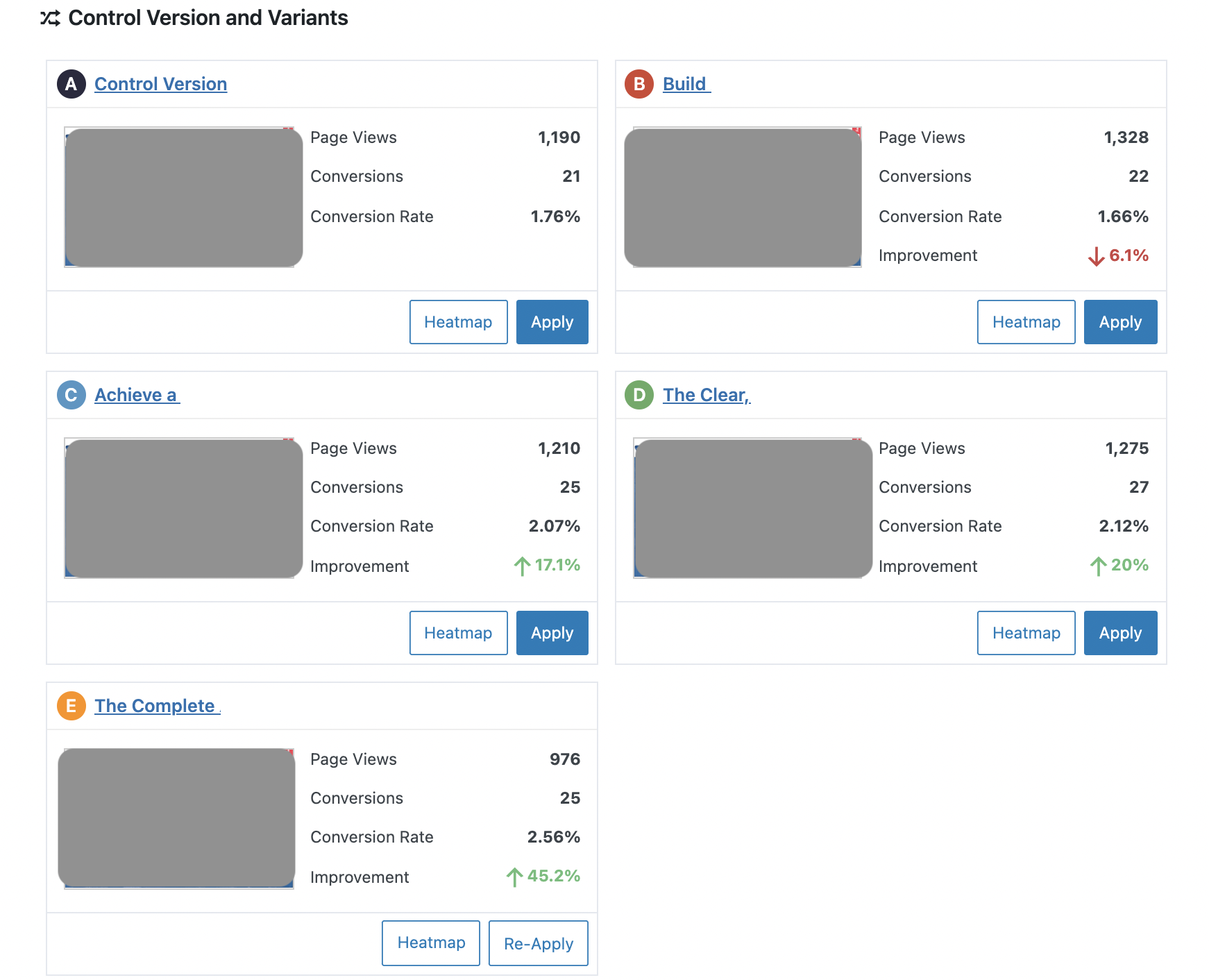
Here are a few quick wins from recent projects:
Sometimes, it’s not about spending more — it’s about testing smarter. |
 |